高速針状ころ軸受内部ころ

Why Stainless Steel Bearings Fail in Corrosive Environments—And Why Si3N4 Is the Ultimate Upgrade

In many industrial systems, bearing failure does not happen suddenly—it begins with corrosion, contamination, and gradual surface degradation. Once steel bearings are exposed to chemicals, 塩水, or vacuum instability, performance drops long before visible damage appears.

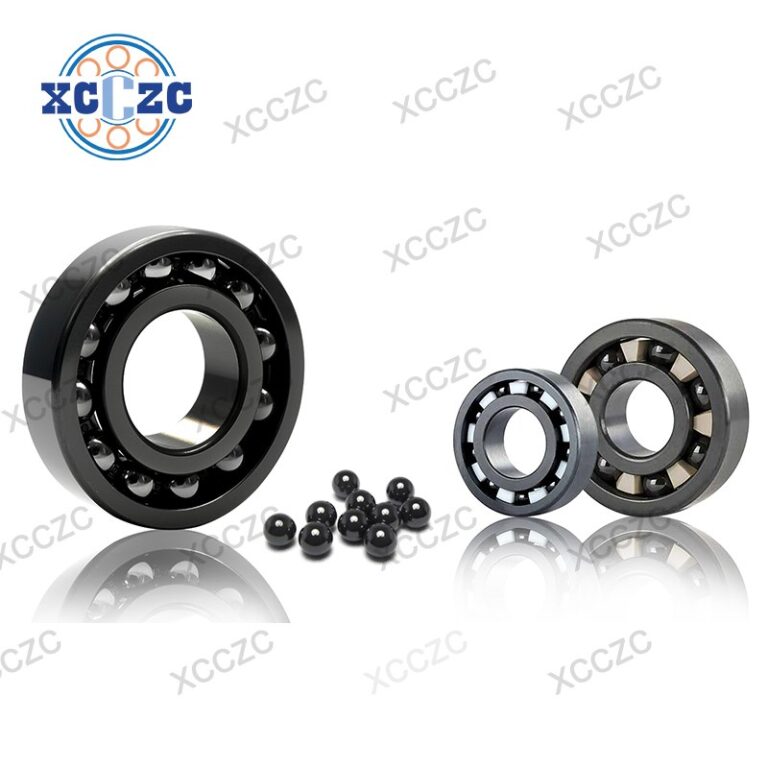
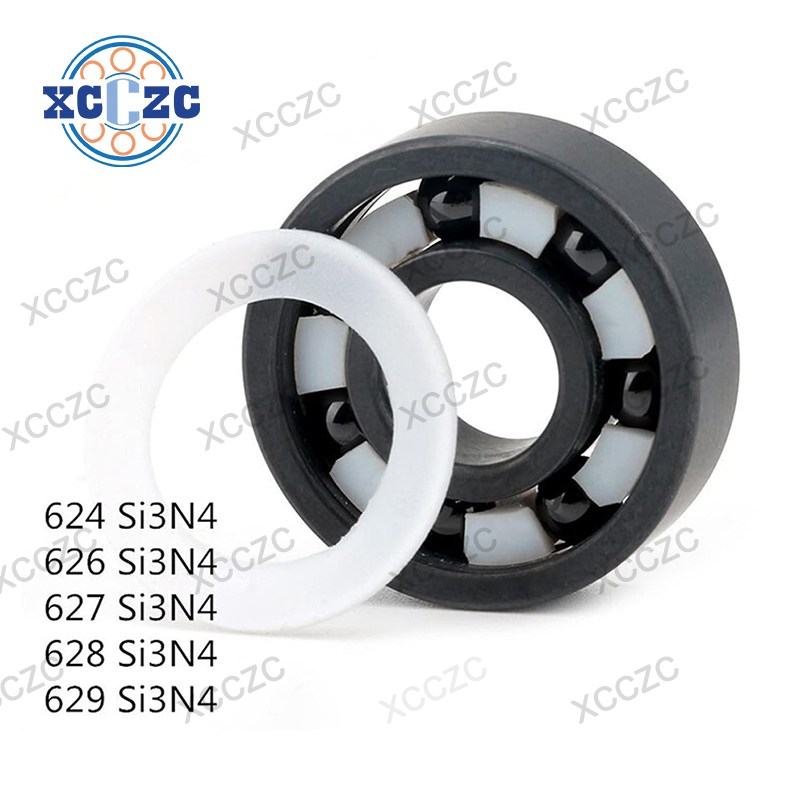
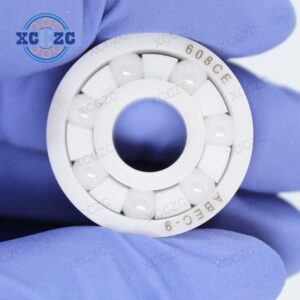
This is where Corrosion-resistant ceramic bearings become a critical engineering upgrade. XCCZCベアリングにて, we design full ceramic deep groove ball bearings made from Si3N4 to eliminate corrosion-related failure modes entirely. Instead of fighting environmental damage, you remove the material that reacts with it.

Why Corrosion Becomes the Real Failure Point

Si3N4 ceramic bearing

Corrosion is not just rust—it is a structural breakdown process that directly affects rotational stability.

In real industrial conditions, you typically see:

  • Chemical processing systems where acids gradually erode raceways
  • Marine equipment exposed to continuous saltwater spray
  • Pharmaceutical systems where cleaning agents degrade lubrication surfaces
  • Vacuum systems where traditional lubricants evaporate or break down

Once corrosion begins, friction increases, heat rises, and bearing failure accelerates exponentially.

Steel bearings and even stainless steel variants only delay this process—they do not eliminate it.

What Makes Si3N4 Corrosion-Resistant Ceramic Bearings Different

Silicon Nitride (Si3N4) is chemically inert, meaning it does not react with most acids, alkalis, or solvents.

This creates a fundamentally different failure behavior:

  • No oxidation layer formation
  • No electrochemical corrosion process
  • No surface pitting or scaling
  • Stable performance in dry, wet, or vacuum conditions

Unlike hybrid bearings, full ceramic construction removes steel entirely, eliminating the weakest element in corrosive environments.

Full Ceramic Bearing vs Steel Bearing in Corrosive Environments

Performance FactorSteel BearingステンレスベアリングSi3N4 Ceramic Bearing
Acid resistancePoorMediumExcellent
Saltwater resistancePoorLimitedExcellent
Vacuum compatibilityLowMediumHigh
Lubrication dependencyHighHighLow / Dry running
Maintenance frequencyHighMediumVery Low

This comparison is why corrosion-resistant ceramic bearings are increasingly used in high-reliability industrial systems.

Technical Advantages of Si3N4 Full Ceramic Bearings

Beyond corrosion resistance, Si3N4 ceramic bearings provide multiple system-level advantages:

  • Electrical insulation prevents arcing damage in motors and generators
  • Non-magnetic behavior supports MRI and precision instrumentation
  • Lightweight structure reduces centrifugal stress at high RPM
  • Self-lubricating performance enables dry running in vacuum or clean environments

These properties make them suitable not only for harsh environments but also for precision-driven systems.

Application Scenarios of Corrosion-Resistant Ceramic Bearings

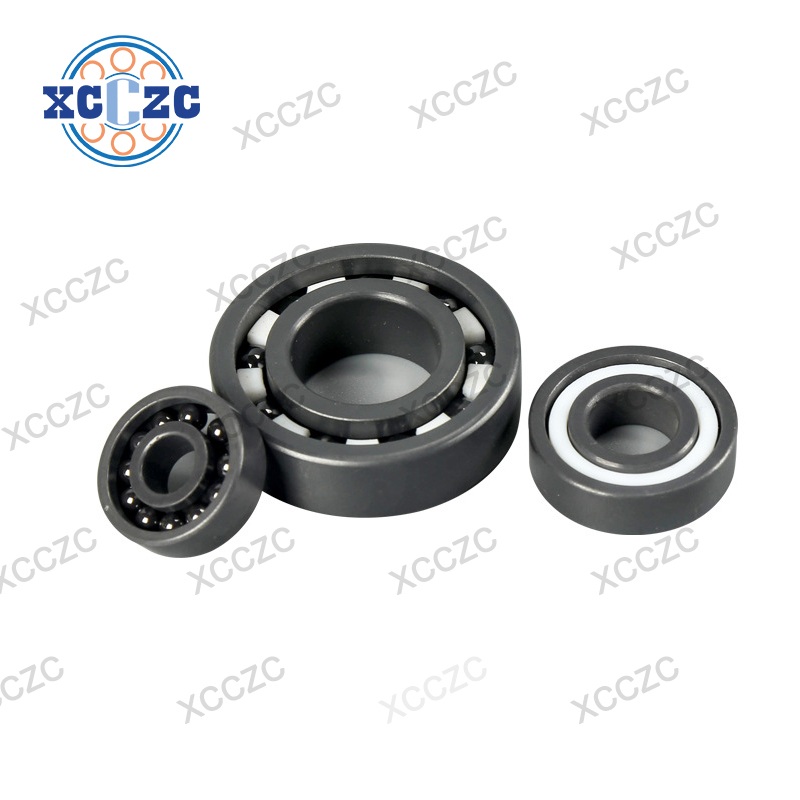
chemical resistant bearing solution

Chemical and Pharmaceutical Processing

Handles strong acids, alkalis, and solvents without surface degradation, ensuring stable operation in continuous reaction systems.

Marine and Offshore Equipment

Resists saltwater corrosion in pumps, propulsion systems, and underwater assemblies.

Semiconductor and Vacuum Systems

Performs reliably in vacuum environments where traditional lubrication fails or evaporates.

Aerospace and High-Tech Equipment

Supports lightweight, non-magnetic, and high-stability rotating systems.

Food and Medical Equipment

Maintains clean operation with minimal contamination risk.

Engineering Design Options for Industrial Integration

To meet different system requirements, XCCZC Bearing offers multiple structural configurations:

  • Full ceramic deep groove ball bearings (standard open type)
  • Cage options: PEEK, PTFE, PA66
  • Full complement designs (no cage for extreme load distribution)
  • Miniature to large diameter customization
  • Metric and inch sizing options

OEM customization is available for specialized industrial integration projects.

Installation and Application Guidance

For optimal performance of corrosion-resistant ceramic bearings:

  1. Ensure housing is free from metallic contamination
  2. Avoid mechanical impact during installation
  3. Maintain precise alignment to prevent edge loading
  4. Select appropriate clearance based on temperature and load conditions
  5. Use dry running or compatible lubrication depending on system design

Correct installation directly impacts bearing lifespan and system efficiency.

Engineering Reliability and Manufacturing Control

Our quality system includes:

  • 100% 出荷前の検査
  • Material verification for Si3N4 ceramic components
  • Dimensional and tolerance testing for precision applications
  • OEM and customized engineering support for global clients

We serve automation, energy, 医学, chemical, and semiconductor industries worldwide, supporting stable industrial supply chains

よくある質問

Q1: Are corrosion-resistant ceramic bearings better than stainless steel bearings?

はい, in chemically aggressive or marine environments, Si3N4 ceramic bearings offer significantly higher resistance and longer service life.

Q2: Can Si3N4 ceramic bearings run without lubrication?

はい, they support dry running in many applications, especially vacuum or chemical environments.

結論

In corrosive and chemically aggressive environments, bearing failure is not a mechanical issue—it is a material limitation. Corrosion-resistant ceramic bearings eliminate this limitation by replacing reactive metals with chemically inert Si3N4 ceramics. と XCCZC Bearing’s engineering capability, these solutions deliver stable performance, reduced maintenance cycles, and long-term reliability across critical industrial systems.

CTA

If you are sourcing corrosion-resistant ceramic bearings for chemical, marine, vacuum, or high-precision applications, contact XCCZC Bearing for OEM customization, technical drawings, and application-specific engineering support.

コメントを追加

あなたのメールアドレスは公開されません. 必須フィールドにマークが付いています

ブログから

関連記事