Dans de nombreux systèmes industriels, la défaillance des roulements ne se produit pas soudainement : elle commence par la corrosion, contamination, et dégradation progressive de la surface. Une fois que les roulements en acier sont exposés à des produits chimiques, eau salée, ou instabilité du vide, les performances chutent bien avant que des dommages visibles n'apparaissent.
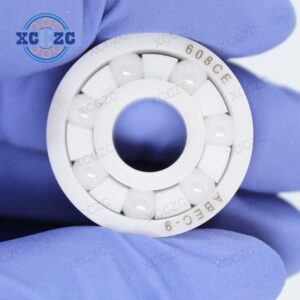
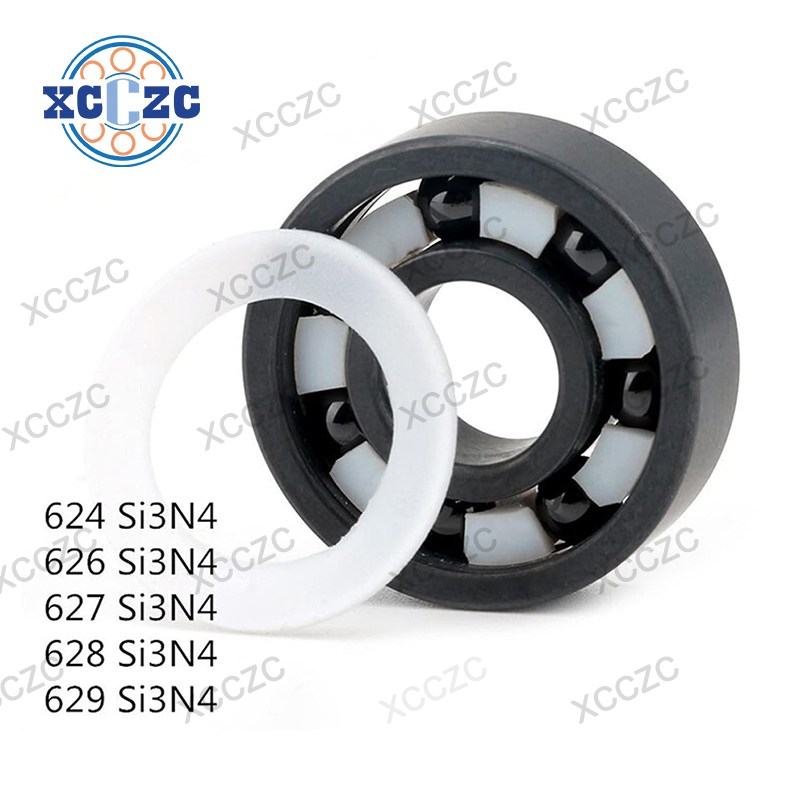
C'est ici Roulements en céramique résistants à la corrosion devenir une mise à niveau technique critique. Chez XCCZC Roulement, nous concevons des roulements rigides à billes entièrement en céramique en Si3N4 pour éliminer complètement les modes de défaillance liés à la corrosion. Au lieu de lutter contre les dommages environnementaux, vous enlevez la matière qui réagit avec.
Pourquoi la corrosion devient le véritable point de défaillance
La corrosion n'est pas seulement de la rouille : c'est un processus de dégradation structurelle qui affecte directement la stabilité rotationnelle..
En conditions industrielles réelles, vous voyez généralement:
Systèmes de traitement chimique où les acides érodent progressivement les chemins de roulement
Équipement marin exposé à des embruns continus d’eau salée
Systèmes pharmaceutiques dans lesquels les agents de nettoyage dégradent les surfaces lubrifiantes
Systèmes de vide où les lubrifiants traditionnels s'évaporent ou se décomposent
Une fois la corrosion commencée, la friction augmente, la chaleur monte, et la défaillance des roulements s'accélère de façon exponentielle.
Les roulements en acier et même les variantes en acier inoxydable ne font que retarder ce processus, ils ne l'éliminent pas.
Ce qui différencie les roulements en céramique résistants à la corrosion Si3N4
Nitrure de Silicium (Si3N4) est chimiquement inerte, ce qui signifie qu'il ne réagit pas avec la plupart des acides, alcalis, ou des solvants.
Cela crée un comportement d'échec fondamentalement différent:
Pas de formation de couche d'oxydation
Aucun processus de corrosion électrochimique
Pas de piqûres ni de tartre en surface
Performance stable sur sol sec, mouillé, ou conditions de vide
Contrairement aux roulements hybrides, la construction entièrement en céramique élimine entièrement l'acier, éliminer l'élément le plus faible dans les environnements corrosifs.
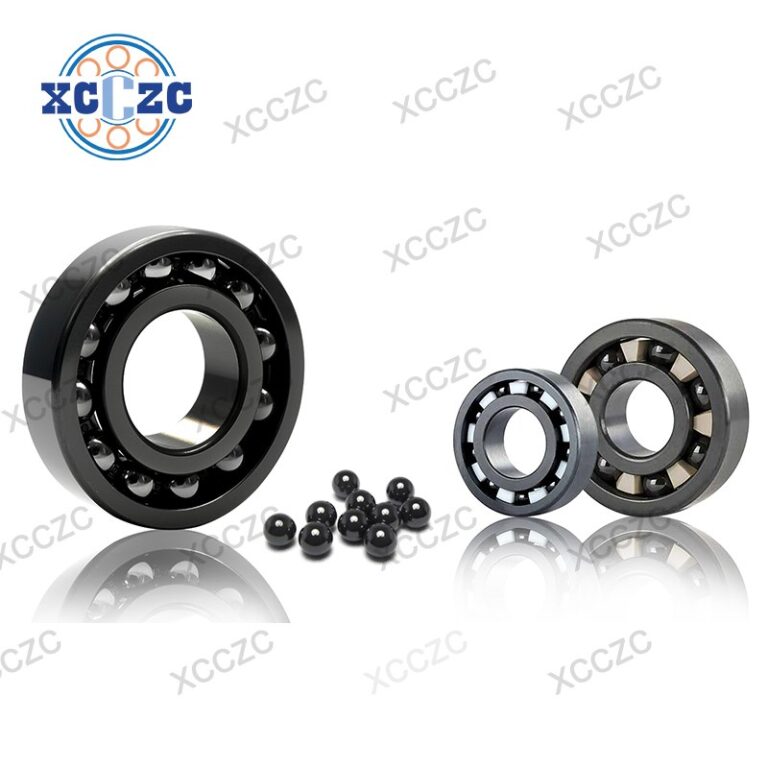
Roulement entièrement en céramique ou roulement en acier dans des environnements corrosifs
Avantages techniques des roulements entièrement en céramique Si3N4
Au-delà de la résistance à la corrosion, Les roulements en céramique Si3N4 offrent de multiples avantages au niveau du système:
L'isolation électrique empêche les dommages causés par les arcs électriques dans les moteurs et les générateurs
Le comportement non magnétique prend en charge l'IRM et les instruments de précision
La structure légère réduit la contrainte centrifuge à haut régime
Les performances autolubrifiantes permettent un fonctionnement à sec dans des environnements sous vide ou propres
Ces propriétés les rendent adaptés non seulement aux environnements difficiles, mais également aux systèmes de précision..
Scénarios d'application des roulements en céramique résistant à la corrosion
Traitement chimique et pharmaceutique
Gère les acides forts, alcalis, et solvants sans dégradation de surface, assurer un fonctionnement stable dans les systèmes de réaction continue.
Équipement marin et offshore
Résiste à la corrosion par l'eau salée dans les pompes, systèmes de propulsion, et assemblages sous-marins.
Systèmes à semi-conducteurs et à vide
Fonctionne de manière fiable dans les environnements sous vide où la lubrification traditionnelle échoue ou s'évapore.
Équipements aérospatiaux et de haute technologie
Prend en charge le poids léger, non magnétique, et systèmes rotatifs à haute stabilité.
Alimentation et équipement médical
Maintient un fonctionnement propre avec un risque de contamination minimal.
Options de conception technique pour l’intégration industrielle
Pour répondre aux différentes exigences du système, XCCZC Bearing offre plusieurs configurations structurelles:
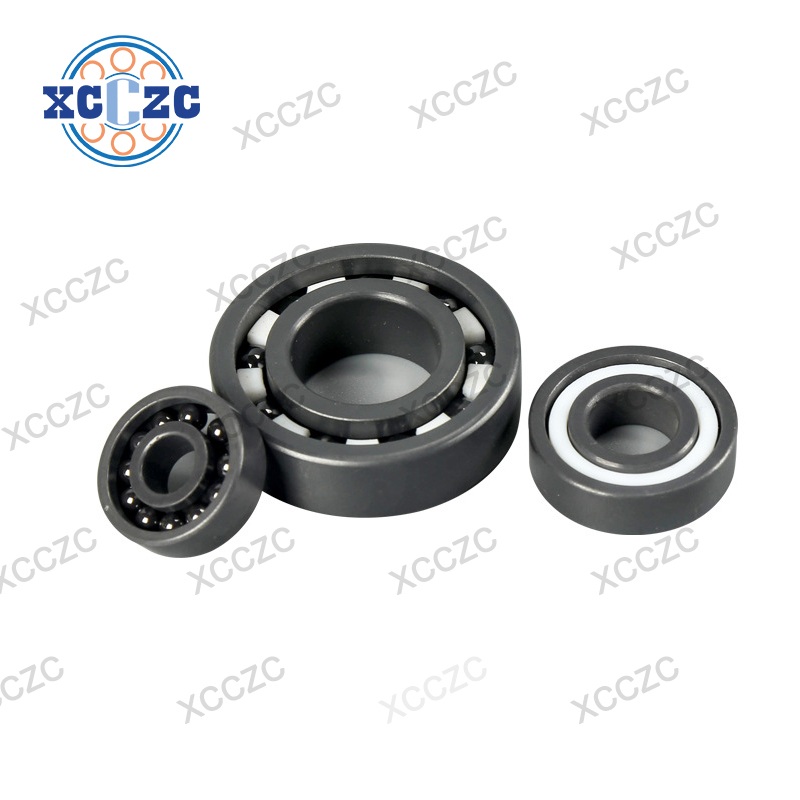
Roulements rigides à billes entièrement en céramique (type ouvert standard)
Options de cages: COUP D'OEIL, PTFE, PA66
Conceptions à complément complet (pas de cage pour une répartition extrême de la charge)
Personnalisation du miniature au grand diamètre
Options de dimensionnement métrique et en pouces
La personnalisation OEM est disponible pour les projets d'intégration industrielle spécialisés.
Guide d'installation et d'application
Pour des performances optimales des roulements en céramique résistant à la corrosion:
Assurez-vous que le boîtier est exempt de contamination métallique
Évitez les impacts mécaniques lors de l'installation
Maintenir un alignement précis pour éviter le chargement des bords
Sélectionnez le dégagement approprié en fonction des conditions de température et de charge
Utiliser un fonctionnement à sec ou une lubrification compatible en fonction de la conception du système
Une installation correcte a un impact direct sur la durée de vie des roulements et l'efficacité du système.
Fiabilité de l'ingénierie et contrôle de la fabrication
Notre système qualité comprend:
100% inspection avant expédition
Vérification des matériaux pour les composants en céramique Si3N4
Tests dimensionnels et de tolérance pour les applications de précision
Support technique OEM et personnalisé pour les clients internationaux
Nous servons l'automatisation, énergie, médical, chimique, et industries des semi-conducteurs dans le monde, soutenir des chaînes d’approvisionnement industrielles stables
FAQ
T1: Les roulements en céramique résistants à la corrosion sont-ils meilleurs que les roulements en acier inoxydable?
Oui, dans des environnements chimiquement agressifs ou marins, Les roulements en céramique Si3N4 offrent une résistance nettement supérieure et une durée de vie plus longue.
T2: Les roulements en céramique Si3N4 peuvent-ils fonctionner sans lubrification?
Oui, ils prennent en charge le fonctionnement à sec dans de nombreuses applications, en particulier les environnements sous vide ou chimiques.
Conclusion
Dans des environnements corrosifs et chimiquement agressifs, la défaillance des roulements n'est pas un problème mécanique, c'est une limitation matérielle. Roulements en céramique résistants à la corrosion éliminer cette limitation en remplaçant les métaux réactifs par des céramiques Si3N4 chimiquement inertes. Avec Roulements XCCZC capacité d'ingénierie, ces solutions offrent des performances stables, cycles de maintenance réduits, et une fiabilité à long terme sur les systèmes industriels critiques.
Appel à l'action
Si vous achetez des roulements en céramique résistant à la corrosion pour des produits chimiques, marin, vide, ou applications de haute précision, contactez le roulement XCCZC pour la personnalisation OEM, dessins techniques, et support technique spécifique à l'application.
🌐Je. Perspectives de l'industrie — Demande croissante dans un contexte d'automatisation 📈 La fabrication intelligente ouvre un marché d'un billion de yuans Alors que l'automatisation industrielle mondiale continue de progresser, le roulement de précision...
Dans le monde exigeant des machines industrielles, la différence entre des performances optimales et des temps d'arrêt coûteux repose souvent sur un seul composant: le roulement. Depuis 2002,...


 par XCCZC