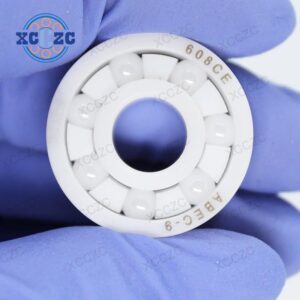
Plastic bearings offer a practical alternative to metal bearings when you need corrosion resistance, electrical insulation, and reduced maintenance in demanding environments. In food processing, chemical handling, and laboratory equipment, exposure to moisture, cleaning agents, or corrosive substances can shorten bearing service life and increase maintenance requirements. Choosing the right bearing material helps you address these challenges while maintaining reliable equipment operation.
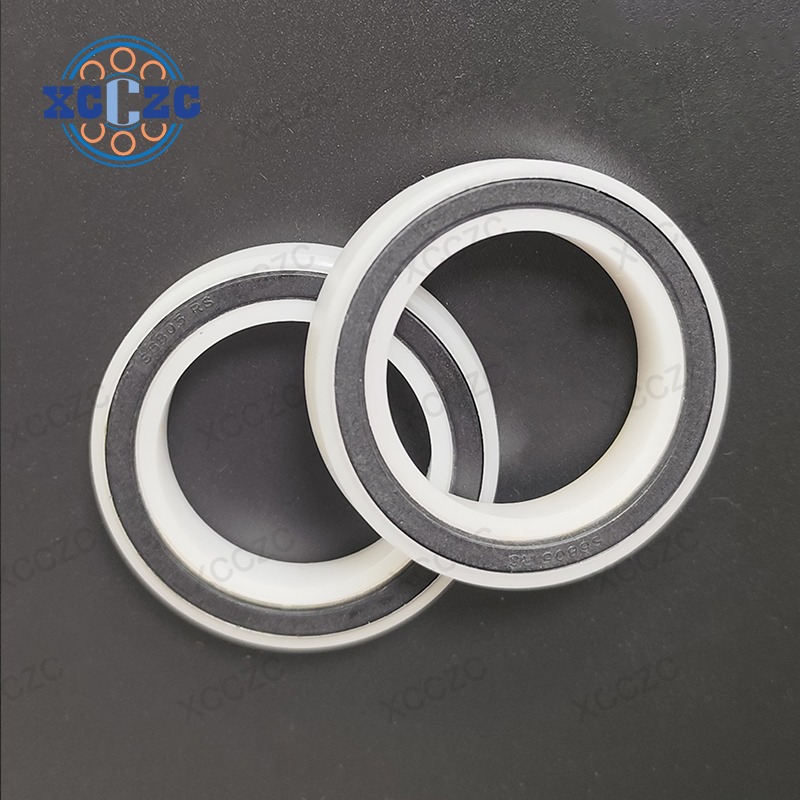
The Thin Section Non-magnetic 6805 2RS Plastic Deep Groove Ball Bearing from Shenzhen Xinchangsheng Bearing Co., Ltd. (XCCZC Bearing) is designed for applications where metal components may present corrosion or electrical conductivity concerns. With a nominal bore diameter of 25 mm, an outer diameter of 37 mm, and a width of 7 mm, this model provides a defined dimensional reference for equipment designers and industrial buyers evaluating engineering plastic bearings.
Why Choose Plastic Bearings for Industrial Equipment?
Plastic bearings use engineering polymers instead of conventional bearing steel for selected operating environments. Depending on the material formulation and bearing design, they can offer several practical advantages.
Corrosion and Chemical Resistance
Metal bearings may corrode when exposed to water, cleaning solutions, or aggressive chemicals. Plastic bearings avoid metallic rust, although their resistance to individual chemicals depends on the polymer, concentration, temperature, and exposure duration.
The 6805 model is described as using engineering plastics such as polyoxymethylene (POM) or polyether ether ketone (PEEK). These materials have different chemical and mechanical properties, so you should confirm the actual material supplied before selecting a bearing for continuous chemical exposure.
Lightweight and Electrical Insulation
Compared with steel components of similar dimensions, polymer bearings can reduce component weight. Their electrically insulating properties can also benefit mechanisms that require electrical separation between rotating components and surrounding structures.
However, the exact insulation performance depends on the complete bearing construction, including any metal inserts or other conductive components.
Reduced Lubrication Requirements
Some plastic bearing designs can operate with little or no external lubrication. This can simplify maintenance in clean production areas, laboratory equipment, and selected food-processing applications.
Nevertheless, dry-running capability depends on the polymer, load, speed, temperature, and shaft material. Confirm these operating limits before replacing a lubricated steel bearing.
6805 Plastic Deep Groove Ball Bearing Specifications
The 6805 plastic deep groove ball bearing combines a single-row deep groove design with a compact 7 mm width. Its stated dimensions help you check whether the bearing fits your existing equipment.
| Specification |
Details |
| Model |
6805 2RS plastic bearing |
| Bearing type |
Single-row deep groove ball bearing |
| Bore diameter (d) |
25 mm |
| Outer diameter (D) |
37 mm |
| Width (B) |
7 mm |
| Material |
POM or PEEK; confirm the supplied grade |
| Key characteristics |
Non-magnetic design, corrosion resistance, electrical insulation |
| Potential applications |
Food processing, laboratory equipment, chemical handling, water treatment |
Before ordering, verify the complete construction of the 2RS version, including its sealing arrangement. Also request rated load, permissible speed, operating temperature, dimensional tolerances, and compatibility information for your application. The available product description does not specify these performance values.

Plastic Bearings vs. Steel Bearings
Selecting between plastic and steel bearings requires more than comparing purchase prices. You should consider the operating environment, maintenance requirements, and mechanical demands of your equipment.
| Comparison factor |
Plastic bearings |
Steel bearings |
| Rust resistance |
Polymer material does not develop metallic rust |
Depends on steel grade and protective measures |
| Chemical compatibility |
Varies by polymer and chemical exposure |
Varies by steel grade and chemical exposure |
| Weight |
Generally lighter |
Generally heavier |
| Electrical conductivity |
Generally insulating, depending on construction |
Generally conductive |
| Load capacity |
Depends on polymer, geometry, and operating conditions |
Often suitable for higher loads, depending on design |
| Lubrication |
Some designs support dry operation |
Often requires suitable lubrication |
| Best-fit applications |
Corrosive, wet, or electrically sensitive environments |
Applications requiring appropriate metal-bearing strength and rigidity |
Neither material is suitable for every operating condition. For heavy loads, high speeds, or elevated temperatures, compare the manufacturer’s documented performance limits before choosing a polymer alternative.
Where Can You Use 6805 Plastic Bearings?
The 6805 model may suit equipment where its dimensions, material properties, and load requirements align with the application.
- Food and beverage processing: Conveyor guides, packaging machinery, and selected bottling equipment exposed to regular cleaning.
- Chemical processing: Pumps, fluid-handling mechanisms, and equipment exposed to compatible chemicals.
- Medical and laboratory equipment: Selected diagnostic mechanisms and fluid-handling systems that benefit from low noise and electrical insulation.
- Water treatment: Components exposed to moisture, splashing, or humid conditions.
- Electronics manufacturing: Selected material-handling mechanisms where electrical isolation is required.
For food-contact or medical applications, confirm the relevant material compliance, cleaning compatibility, and equipment-specific requirements. A plastic bearing is not automatically food-grade or medically certified simply because it uses an engineering polymer.
How to Select the Right Plastic Bearing
Follow these steps before purchasing a 6805 plastic bearing or requesting a customized solution.
- Measure the installation space. Confirm the 25 mm bore, 37 mm outside diameter, and 7 mm width against your shaft and housing drawings.
- Identify the exposure conditions. List the chemicals, cleaning agents, moisture levels, and expected operating temperatures.
- Calculate the operating demands. Provide radial and axial loads, shaft speed, duty cycle, and expected service life.
- Confirm the material and construction. Ask whether the bearing uses POM, PEEK, or another polymer, and verify its sealing arrangement and lubrication requirements.
- Request technical documentation. Obtain applicable drawings, tolerances, load ratings, and material data before approving production or installation.
This process helps you avoid selecting a bearing based on dimensions alone.
Why Source Plastic Bearings from XCCZC Bearing?
Founded in 2002, Shenzhen Xinchangsheng Bearing Co., Ltd. (XCCZC Bearing) specializes in precision bearing manufacturing for industries including automation, automotive, medical equipment, and energy.
The company reports a 5,000 m² factory that began operating in 2025 and a monthly production output of three million bearings. Its stated capabilities include OEM services for customized sizes, logos, and packaging, along with engineering support for different application requirements.
When evaluating a supplier, request model-specific material specifications, inspection records, and applicable compliance documents. These details help you assess whether the proposed bearing meets your equipment’s operating requirements.
FAQ
1. Are plastic bearings suitable for wet environments?
Yes, selected plastic bearings can perform well in wet environments because their polymer materials do not develop metallic rust. However, chemical exposure, temperature, loads, and the bearing’s complete construction still determine suitability.
2. What are the dimensions of the 6805 plastic bearing?
The stated dimensions are 25 mm bore diameter, 37 mm outer diameter, and 7 mm width. Confirm dimensional tolerances and the sealing configuration with the supplier before ordering.
3. Can XCCZC Bearing provide customized plastic bearings?
XCCZC Bearing reports OEM capabilities for customized bearing sizes, logos, and packaging. Contact its engineering team to discuss your drawings, material requirements, operating conditions, and minimum order requirements.
Conclusion
Plastic bearings can help you address corrosion, electrical insulation, and maintenance challenges when the material matches your operating conditions. The 6805 plastic deep groove ball bearing offers stated dimensions of 25 × 37 × 7 mm for equipment designers evaluating compact bearing solutions. Before making a final selection, verify its polymer grade, load capacity, speed limits, and environmental compatibility.
Request a Technical Quote from XCCZC Bearing
Share your application, required quantity, operating conditions, and dimensional drawings with XCCZC Bearing. Its team can help you evaluate the 6805 model or discuss an OEM bearing solution tailored to your equipment requirements.


 by XCCZC