Choosing a self-aligning ball bearing factory matters when your equipment operates under shaft deflection, inexactitudes en matière de logement, ou un mauvais alignement de l'installation. Un mauvais roulement peut augmenter les vibrations, accelerate wear, and lead to unexpected maintenance costs. Donc, you need more than a competitive quotation: you need accurate specifications, consistent manufacturing quality, and a supplier that understands your operating conditions.
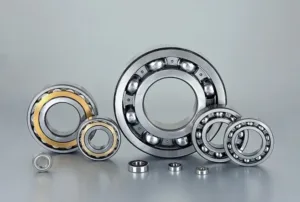
XCCZC, also known as Shenzhen Xinchangsheng Bearing Co., Ltd., fabrique des roulements de précision depuis 2002. Its product range includes self-aligning ball bearings designed for applications that require automatic alignment compensation. By reviewing the 1200–1206 series, comparing technical parameters, and evaluating manufacturing capabilities, you can determine whether a supplier meets your equipment requirements and purchasing objectives.
What Does a Self-Aligning Ball Bearing Factory Provide?
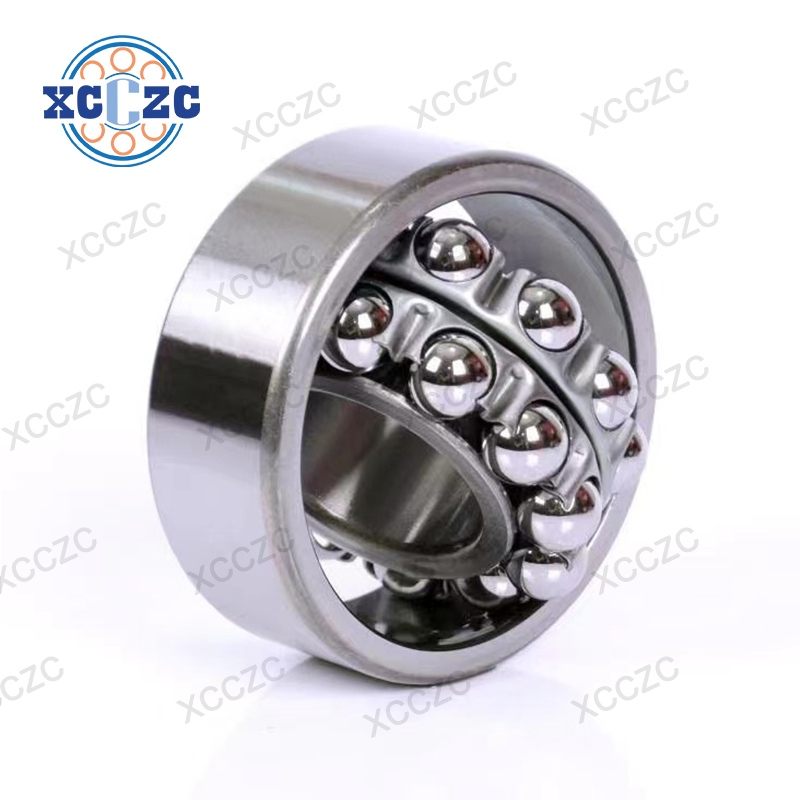
A self-aligning ball bearing uses two rows of balls and a common spherical raceway in the outer ring. This design allows the bearing to accommodate a certain degree of angular misalignment between the shaft and housing.
When you source from a specialized self-aligning ball bearing manufacturer, evaluate the following factors:
- Product specifications: Confirm bore diameter, diamètre extérieur, largeur, load ratings, and allowable operating speed.
- Material and heat treatment: Check the bearing steel grade, hardness requirements, and manufacturing specifications.
- Contrôle de qualité: Ask how the factory verifies dimensional accuracy, running performance, and product consistency.
- Capacités OEM: Determine whether the supplier supports custom dimensions, logos, conditionnement, or other agreed requirements.
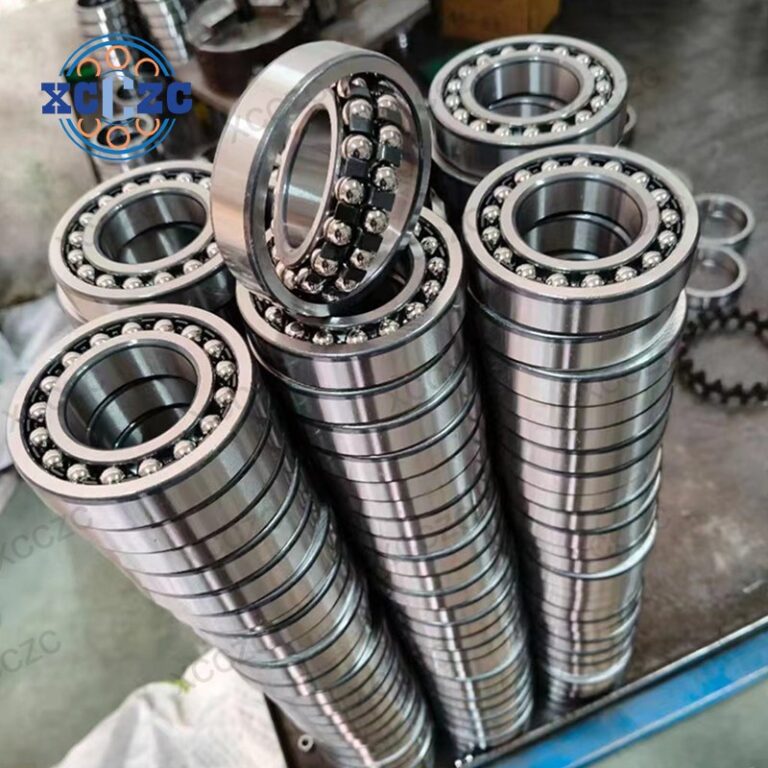
XCCZC was founded in 2002 and operates a 5,000 m² factory with a stated monthly output of 3 millions de roulements. The company also reports serving more than 20 countries and supporting over 1,000 projets OEM mondiaux. These figures provide useful background when evaluating its manufacturing capacity, although you should confirm the requirements and quality documentation for your specific order.
1200–1206 Double Row Self-Aligning Ball Bearings
The 1200–1206 series provides options for equipment designers and maintenance teams who need self-aligning ball bearings in different sizes. Cependant, you should verify the dimensions of each model instead of assuming that all models share the same specifications.
Le 1206 model illustrates the technical parameters you should review before purchasing.
1206 Self-Aligning Ball Bearing Specifications
| Paramètre |
1206 specification |
| Type de roulement |
Double row self-aligning ball bearing |
| Diamètre d'alésage (d) |
30 mm |
| Diamètre extérieur (D) |
62 mm |
| Largeur (B) |
16 mm |
| Capacité de charge dynamique (Cr) |
Environ 19.5 kN |
| Static load rating (Cor) |
Environ 6.55 kN |
| Limiting speed with grease |
Jusqu'à 9,000 tr/min, subject to operating conditions |
| Matériel |
Acier chromé à haute teneur en carbone |
| Dureté |
58–62 HRC, as specified for this product |
Use these figures as an initial selection reference and confirm them against the supplier’s current technical datasheet. Actual speed limits and service life depend on lubrication, loading, température, clearance, et conditions de pose.
Why Choose a Double Row Self-Aligning Ball Bearing?
This bearing design offers several practical advantages:
- Misalignment compensation: Helps accommodate angular misalignment caused by shaft deflection or mounting inaccuracies.
- Reduced vibration: Proper bearing selection and installation can help limit vibration associated with misalignment.
- Versatile operation: Supports radial loads and limited axial loads, subject to the bearing’s design and operating conditions.
- Maintenance planning: Correct sizing, lubrification, and installation can help reduce premature wear and unplanned downtime.

Applications of Self-Aligning Ball Bearings
A self-aligning ball bearing factory should help you match bearing specifications to your actual application rather than recommend a model based on dimensions alone.
Les applications courantes incluent:
- Machines agricoles: Tractors, moissonneuses, and irrigation equipment that operate under changing loads and uneven ground conditions.
- Systèmes de convoyeurs: Conveyor shafts and pulley assemblies where alignment can change during installation or operation.
- Machines textiles: Equipment requiring stable rotation during continuous production.
- Ventilation systems: Fans and blowers that may experience mounting inaccuracies or thermal expansion.
- General industrial equipment: Suitable motors, pompes, and light-duty gearboxes when their load, vitesse, and alignment requirements match the bearing’s capabilities.
Before placing an order, check the shaft fit, housing tolerance, charge radiale, charge axiale, lubrication method, and expected operating speed.
Self-Aligning Ball Bearings vs. Spherical Roller Bearings
Although both bearing types accommodate misalignment, their rolling elements and load capabilities differ.
| Comparison factor |
Self-aligning ball bearing |
Roulement à rotule sur rouleaux |
| Rolling elements |
Two rows of balls |
Spherical rollers |
| Typical load suitability |
Moderate radial loads and limited axial loads |
Often suited to heavier radial loads |
| Friction and speed |
Often suitable for higher-speed applications within rated limits |
Depends on design, load, and lubrication |
| Typical applications |
Fans, convoyeurs, and textile equipment |
Heavy machinery and demanding industrial drives |
| Selection priority |
Vitesse, alignement, and dimensional fit |
Load capacity, charges de choc, and operating conditions |
Neither type is universally better. Select the bearing that matches your load calculations, speed requirements, espace d'installation, and expected service conditions.
How to Select a Reliable Self-Aligning Ball Bearing Factory
Follow these steps to evaluate a supplier and reduce purchasing uncertainty.
- Define your operating requirements. Record shaft dimensions, housing space, radial and axial loads, operating speed, température, and lubrication method.
- Identify the correct bearing model. Compare the 1200–1206 series dimensions with your equipment drawings and existing bearing designation.
- Request technical documentation. Ask for dimensional specifications, load ratings, material information, tolerances, and applicable inspection records.
- Evaluate customization and delivery. Confirm OEM options, minimum order quantities, production lead times, conditionnement, and shipping arrangements.
- Verify quality requirements. Request relevant quality certificates and inspection documentation before approving the order.
XCCZC offers OEM services for custom bearing sizes, logos, et emballage. Its team also reports providing engineering support and pre-shipment inspection. Confirm the available service scope, inspection criteria, and delivery schedule with the company before finalizing your purchase.
FAQ
1. What does a self-aligning ball bearing factory manufacture?
A specialized factory manufactures bearings designed to accommodate a certain degree of angular misalignment. XCCZC supplies precision bearing products, including the 1200–1206 double row self-aligning ball bearing series.
2. What should you check before buying a 1206 self-aligning ball bearing?
Verify the 30 mm alésage, 62 mm diamètre extérieur, 16 mm largeur, load ratings, exigences de lubrification, and operating speed. Also confirm material specifications and dimensional tolerances against the supplier’s current technical documentation.
3. Does XCCZC support OEM bearing orders?
XCCZC reports offering customized bearing sizes, logos, et emballage. Contact the company to confirm technical feasibility, order quantities, sample availability, lead times, and the documentation required for your project.
Conclusion
Choisir le bon self-aligning ball bearing factory requires a balance of technical suitability, manufacturing capability, and quality verification. The 1200–1206 series can serve applications where misalignment compensation is important, provided the selected model meets the equipment’s dimensional, load, and speed requirements.
XCCZC brings bearing manufacturing experience dating back to 2002, a stated 5,000 usine de m², and OEM project experience. Evaluate these capabilities alongside the technical documents and quality records relevant to your application before making a purchasing decision.
Request a Bearing Specification Review
Envoyer XCCZC your bearing model, shaft dimensions, operating speed, load requirements, and estimated order quantity. The team can review your requirements and discuss suitable models, OEM options, and a quotation.

 par XCCZC